What Is the 50-30-20 Rule for Salary Budgeting in India?

Managing monthly expenses is one of the biggest challenges for salaried individuals in India. This is where the 50-30-20 rule for Indian salary comes in as a simple, budgeting method.
What Is the 50-30-20 Rule for Salary Budgeting in India?
Managing monthly expenses is one of the biggest challenges for salaried individuals in India—especially when income feels tight and expenses feel endless. This is where the 50-30-20 rule for Indian salary comes in as a simple, practical budgeting method.
This article explains the 50-30-20 rule explained simply in India, how to apply it step-by-step, and whether it works for Indian income levels.
What Is the 50-30-20 Rule? (Explained Simply)
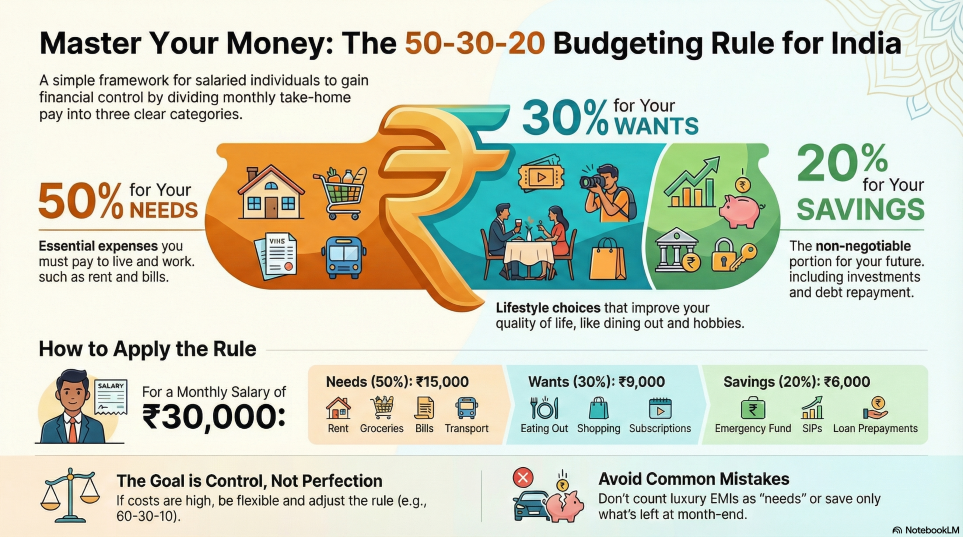
The 50-30-20 rule is a budgeting formula that divides your monthly take-home salary into three parts:
50% for Needs 30% for Wants 20% for Savings
In simple terms, it tells you how to divide salary using the 50-30-20 rule so that you can manage expenses, enjoy life, and still save for the future.
This rule is especially helpful as a 50-30-20 rule for budgeting beginners in India because it doesn’t require complex calculations or financial knowledge.
How to Use the 50-30-20 Budget in India
Let’s understand how this works in the Indian context.
1️⃣ 50% for Needs (Essential Expenses)
These are expenses you must pay every month to live and work.
Examples of needs in India:
House rent or home loan EMI Electricity, water, gas bills Groceries and daily food School or college fees Basic transport (bus, petrol, office travel) Mobile and internet bills
👉 Rule: Your total essential expenses should ideally stay within 50% of your salary.
2️⃣ 30% for Wants (Lifestyle Expenses)
Wants are expenses that improve your lifestyle but are not compulsory.
Examples:
Eating out, ordering food
OTT subscriptions (Netflix, Prime, etc.)
Shopping beyond basic needs
Weekend trips, movies
Gadgets, upgrades, hobbies
👉 This part makes the 50/30/20 rule for Indian salary realistic, because it allows enjoyment—without guilt.
3️⃣ 20% for Savings and Investments
This is the most important part—and the most ignored.
Examples of savings in India:
Emergency fund
Fixed deposits
Mutual funds / SIPs
PPF, NPS
Insurance premiums
Loan prepayments
👉 Treat savings like a non-negotiable bill. Save first, spend later.
Example: How to Divide Salary Using the 50-30-20 Rule
If your monthly salary is ₹30,000, here’s how it should be divided:
₹15,000 (50%) → Needs
₹9,000 (30%) → Wants
₹6,000 (20%) → Savings
Even if you earn ₹15,000 or ₹50,000, the percentage logic remains the same, which is why the rule works across income levels.
Does the 50-30-20 Rule Work in India?
Yes—but with flexibility.
In Indian cities where rent is high, many people adjust it to:
60-30-10 or 55-25-20
The goal is not perfection. The goal is control and awareness.
This is why many professionals recommend the approach as a starting point for financial discipline, especially when explaining what is the 50-30-20 rule to first-time earners.
Common Mistakes Indians Make While Using This Rule
Counting EMIs for luxury items as “needs”
Not tracking small expenses like chai, snacks, subscriptions
Saving only if money is left at month-end
Ignoring irregular expenses (insurance, festivals, repairs)
Avoiding these mistakes makes the 50-30-20 rule for Indian salary far more effective.
Final Thoughts The 50-30-20 rule explained simply in India is not about restriction—it’s about balance.
If you’re confused about budgeting, living paycheck to paycheck, or unsure where your money disappears every month, this rule gives you a clear structure to follow.
As often explained by CA Karan Gupta, budgeting is not about earning more—it’s about managing better.
Start small. Stay consistent. Your financial clarity will follow.