How do I manage monthly expenses on ₹15,000 salary in India
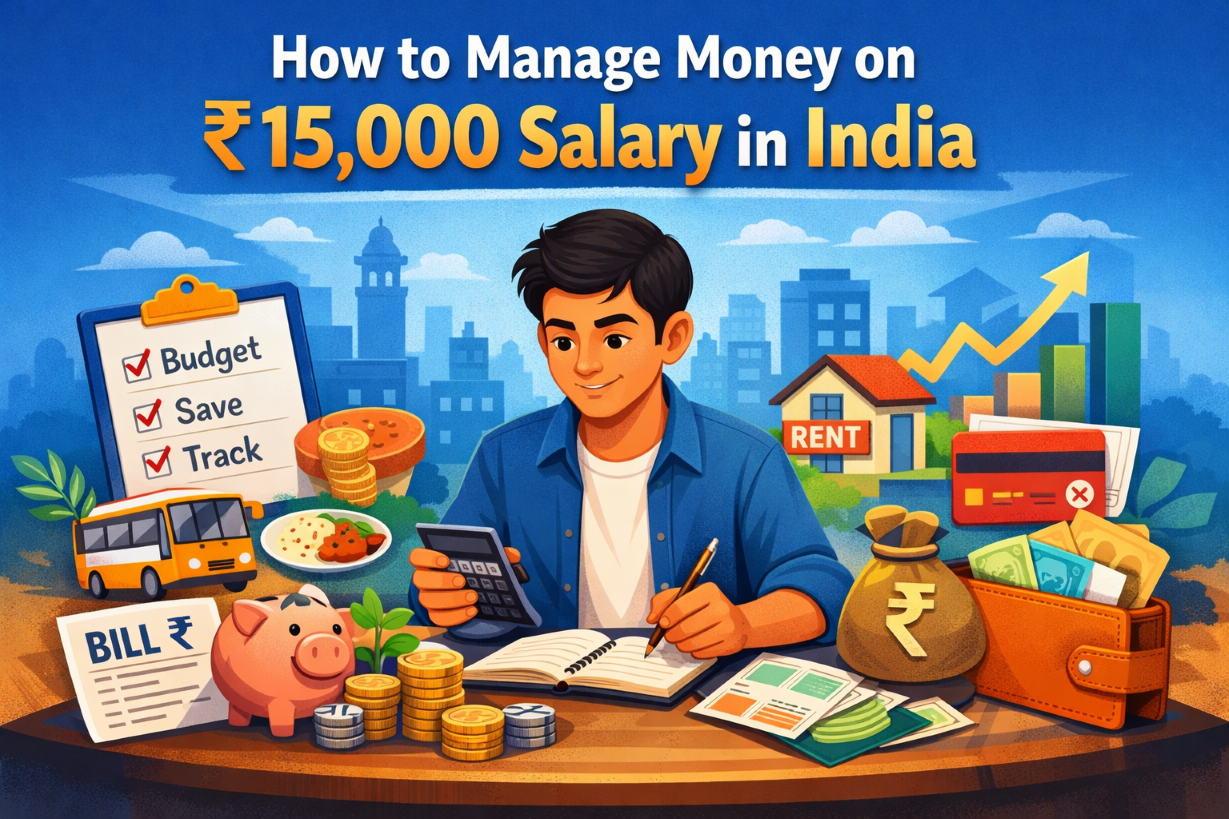
Earning ₹15,000 a month and still wondering where your money disappears? Salary gets credited, a few UPI payments happen, bills get paid, and suddenly it’s the 20th with almost no balance left.
"# How do I manage monthly expenses on ₹15,000 salary in India
Earning ₹15,000 a month and still wondering where your money disappears? Salary gets credited, a few UPI payments happen, bills get paid, and suddenly it’s the 20th with almost no balance left. If this feels like your life every month, don’t blame yourself — this problem is extremely common in India.
The issue is not your salary. The issue is not having a simple system to manage money on a low income. Let’s understand this step by step, in plain language.
---
Why Managing Expenses on a ₹15,000 Salary Feels So Hard
Most first-time earners and salaried employees struggle because:
- No one teaches money management in school or college
- Expenses happen daily, but planning happens rarely
- Saving is treated as “optional”
- Small spends look harmless but add up quickly
When this continues, the consequences are serious:
- Month-end stress becomes routine
- No emergency savings
- Dependence on loans or credit cards
- Even salary hikes don’t improve financial comfort
This is exactly why expense management for beginners in India is critical.
---
Step-by-Step: How to Manage Money on ₹15,000 Salary in India
You don’t need complicated finance rules. You need clarity, discipline, and realistic planning.
---
Step 1: Be Clear About Your Actual Monthly Income
First, write this down clearly:
- Salary credited every month: ₹15,000
- Any side income? (freelance, tuition, commission)
- Is income fixed or sometimes delayed?
Until you know the exact number coming in, budgeting will not work.
---
Step 2: Use a Simple 3-Part Budget System (Indian Friendly)
This is one of the most practical budgeting tips for low income India.
---
Fixed Expenses (50–55%)
These are unavoidable expenses:
- Rent / PG / hostel charges
- Food & groceries
- Daily travel (bus pass, petrol, shared auto)
- Mobile & internet
- Electricity (if applicable)
For ₹15,000 salary: Try to keep fixed expenses within ₹7,500–₹8,000.
If your fixed expenses are higher, lifestyle adjustment is needed — not stress.
---
Variable Expenses (25–30%)
These expenses change every month:
- Eating outside
- Shopping
- Movies, OTT subscriptions
- Small trips, gifts, impulse buys
For ₹15,000 salary: Limit this to ₹3,500–₹4,000.
This is the area where most people lose control without realising it.
---
Savings (Minimum 15–20%)
Many people say, “I’ll save when my salary increases.” That day rarely comes.
Savings should include:
- Emergency fund
- RD or savings account
- Small SIP (only after basics are covered)
For ₹15,000 salary: Target ₹2,500–₹3,000.
Important rule: Save on salary day, not after spending.
---
Practical Monthly Budget Example (₹15,000 Salary)
| Expense Category | Amount (₹) |
|---|---|
| Rent / PG | 3,500 |
| Food & groceries | 2,500 |
| Travel | 1,200 |
| Mobile + Internet | 500 |
| Fixed Expenses Total | 7,700 |
| Variable expenses | 3,800 |
| Savings | 3,500 |
| Total | 15,000 |
This is a realistic example of how to live on low salary in India without constant anxiety.
---
What If Your Salary Is ₹10,000 or ₹25,000?
How to Save Money on ₹10,000 Salary
At ₹10,000, the focus is survival and habit-building.
- Shared room or hostel
- Avoid EMIs completely
- No credit cards
- Prefer home food
- Save at least ₹1,000, even if it feels small
At this stage, habits matter more than comfort.
---
Monthly Budget for ₹25,000 Salary
Many people make mistakes after salary increases.
| Category | Amount (₹) |
|---|---|
| Fixed expenses | 12,000–13,000 |
| Variable expenses | 6,000–7,000 |
| Savings | 5,000–6,000 |
If income rises but savings don’t, the problem is not salary — it’s discipline.
---
Simple Expense Tracking (No Apps Required)
You don’t need fancy apps or finance software.
Use any one:
- Notes app
- Google Sheet
- Small notebook
Every day, track only three things:
- What did I spend?
- Why did I spend it?
- Was it necessary?
This simple habit alone improves money control by 30–40%.
---
Common Mistakes to Avoid
❌ Saving only if money is left ❌ Using credit cards on low salary ❌ Ignoring small daily expenses ❌ No emergency fund ❌ Comparing your lifestyle with others
These mistakes keep people financially stuck even after earning more.
---
Actionable Checklist: Start This Month
- ✅ Write down all fixed expenses
- ✅ Decide savings amount on salary day
- ✅ Set a weekly spending limit
- ✅ Track expenses daily
- ✅ Review money every Sunday
- ✅ Increase savings whenever income increases
Follow this consistently for 3 months and you will see the difference.
---
When Should You Take Professional Guidance?
As a Chartered Accountant, CA Karan Gupta regularly guides:
- First-time earners
- Salaried employees
- Small business owners
- Startup founders
If you feel confused, stressed, or stuck despite trying, it’s better to consult early. Correct guidance at the right time prevents years of financial stress.
---
Quick Summary
- Low salary does not mean poor money management
- Budgeting brings control, not restriction
- Savings are possible at every income level
- Habits matter more than income
---
FAQs
Is it really possible to save on ₹15,000 salary? Yes, with planned expenses and saving first.
Should I invest or only save initially? Save first. Invest after building an emergency fund.
Are EMIs advisable on low salary? Avoid unless absolutely necessary.
Cash or UPI — what’s better? UPI is fine, but only if you track spending.
When should I seek professional advice? When money stress becomes regular or confusing.
---
Final Thought
You don’t need a high salary to manage money well. You need clarity, consistency, and correct guidance.
And remember: You are not bad with money — you were just never taught how to manage it properly.